What a Country's Payment Method Mix Tells You Before You Launch There
Launching in Brazil without accepting Pix is like launching in the Netherlands without iDEAL. In both markets, cards sit at the margins. A 2026 survey shows Brazil's card relevance marked "Medium," the Netherlands' marked "Low." These figures are not decorative.
They reveal which rails carry consumer trust, which checkout models actually convert, and whether your business can handle refunds, disputes, or recurring charges.
The Mix as Market Signal
Payment method data is always dated. Gr4vy's figures reflect April 2026, not some static truth. Treat them as a snapshot of infrastructure and habit, not a forecast. The point is to read what dominates now and what that dominance implies.
Stripe's guide to payment-method types notes that in large markets with low card use, including Brazil, Mexico, and Indonesia, customers prefer cash-based vouchers and bank transfers. These methods do not support immediate payment confirmation. They do not support native refunds. A checkout built for card logic fails here.
The pattern repeats. Kenya runs on M-PESA, a mobile wallet with card relevance "Low." China runs on Alipay and WeChat Pay, card relevance "Very low (domestic)." India and Brazil both run on instant payment rails, UPI and Pix respectively, with card relevance "Medium." The United States looks different: digital wallets and credit cards dominate, with PayPal and Apple Pay as key local schemes, card relevance "High."
These mixes encode local banking history, regulatory choices, and the presence or absence of a domestic scheme. They also encode operational constraints. A merchant reading this data correctly can predict which revenue models will survive.
Cards and Wallets: Different Rules
Stripe distinguishes two families with superficial similarity. Cards support recurring payments, refunds, and disputes. They also carry the highest dispute rate. Digital wallets typically support the same three functions but with lower dispute exposure. The distinction matters for fraud exposure and chargeback reserves.
Both families allow a merchant to store payment details on file and charge again. Stripe's payment-methods guide emphasises this point for recurring revenue businesses: consider whether credentials can be reused. Wallets and cards pass this test.
But the similarity ends where the underlying rail changes. A wallet built on top of a card is not a card. Treating it as one ignores the wallet's own dispute path, its refund timeline, and its recurring-charge mechanics. This is the first trap: assuming the card underneath means card rules apply.
Bank Transfer and Account-to-Account Rails
The second trap is assuming bank transfer behaves like a card. It does not.
An August 2026 analysis of account-to-account payments shows the variation. European Union SEPA Direct Debit carries consumer refund rights. SEPA Credit Transfer has no reversal; only a recall process for errors exists, and that runs through the banks, not the merchant. Brazil's Pix, by contrast, is instant and offers merchant-initiated refund and dispute options. Canada's Interac e-Transfer is irrevocable once deposited; disputes go through the issuer only, with no merchant-side mechanism.
These rails dominate in several Gr4vy-listed markets. Germany's mix is BNPL, debit, and bank transfer, with Girocard, Klarna, and SEPA as key schemes. The Netherlands is bank-transfer-led via iDEAL. France is domestic-card-led via Cartes Bancaires, but that is a local scheme with its own rules, not Visa or Mastercard by another name. Poland is mobile-payment-led via BLIK.
Each of these carries different refund rights, different dispute paths, and different recurring-charge feasibility. A subscription business entering Germany cannot assume SEPA Credit Transfer supports stored-credential billing. A marketplace entering the Netherlands cannot assume iDEAL handles seller disbursements like a card network.
Reading the Country List
Gr4vy's nine markets sort into four patterns.
Card-heavy, international-scheme markets: The United States, with high card relevance and global wallet acceptance.
Card-heavy, domestic-scheme markets: France, where Cartes Bancaires dominates and card relevance is "High (local scheme)." Acceptance here means scheme membership, not just Visa/Mastercard integration.
Transfer-heavy or instant-rail markets: The Netherlands, Germany, Brazil, India. Each has a national infrastructure, iDEAL, SEPA, Pix, UPI, with card penetration below the level that would let a foreign merchant ignore local rails.
Wallet-heavy or mobile-led markets: China, Kenya, Poland. Here card relevance ranges from "Very low" to "Medium and growing." The growth figure for Poland matters: BLIK is expanding, but card infrastructure is not absent.
The merchant's task is to map this pattern against their revenue model. A one-time purchase business has different constraints than a subscription business. A marketplace with seller payouts faces different rails than a direct merchant.
The Subscription Test
Recurring revenue is where the method mix bites hardest. Stripe's guidance on storing payment details for reuse is directed at this use case. Wallets and cards allow it. Most bank transfer rails do not. Voucher and cash-based methods do not.
Documentation on SEPA Direct Debit versus SEPA Credit Transfer illustrates the gap. Direct Debit supports recurring pulls. Credit Transfer does not. A German merchant relying on SEPA Credit Transfer for subscriptions is not adapting to local preference; they are breaking their business model.
Pix and UPI complicate this. Both are instant. Pix supports merchant-initiated refunds. But recurring charge support depends on implementation and local partner integration, not the rail itself. The merchant must verify, not assume.
What to Check Before Launch
A practical checklist emerges from the sources:
- What method dominates? (Gr4vy)
- Who operates it? (Gr4vy's named local schemes)
- Does it support refunds? (Stripe for cards/wallets, Checkout.com for A2A)
- Does it support disputes? (Stripe for cards/wallets, Checkout.com for A2A)
- Can it recur? (Stripe on stored credentials)
- Can credentials be stored and reused? (Stripe)
- Is the market local-scheme led? (Gr4vy's card relevance and domestic scheme notes)
Two traps recur. The wallet-presented-as-card assumption: a wallet with a card underneath is still a wallet, with its own rules. The competitor-copying assumption: a checkout mix that works for an established player may rely on stored credentials, local trust, or domestic scheme integration that a new entrant lacks.
The Revenue Model Question
If a method cannot be charged again, or cannot be stored and reused, the merchant faces a structural choice. They are not adjusting a payment page. They are changing how revenue arrives. The Netherlands' iDEAL, Germany's SEPA Credit Transfer, Brazil's voucher systems: these force prepaid, invoice, or manual-renewal models. Subscription logic does not port.
Gr4vy's data is from April 2026. Stripe's guidance is from October 2026 and March 2026. Checkout.com's analysis is from August 2026. The sources are recent but not eternal. Payment infrastructure shifts. Regulatory frameworks change. What holds is the principle: the method mix is legible, it encodes operational constraints, and reading it wrong is expensive.
Sources
- Gr4vy, “Payment methods by country 2026: what dominates each market and how to accept them” — gr4vy.com, 2026-04-09
- Stripe, “A Guide to Types of Payment Methods” — stripe.com, 2026-10-02
- Stripe, “A guide to payment methods” — stripe.com, 2026-03-31
- Checkout.com, “What are A2A payments? | Checkout” — checkout.com, 2026-08-26
More from Markets & Regions
Section index
Casino en ligne sans licence ARJEL
Dans le domaine des jeux d'argent sur Internet , de nombreux opérateurs ne sont pas placés sous le contrôle de l'ARJEL (devenue aujourd'hui ANJ - Autorité…

Casino Royal Vegas en ligne
Parlons d’abord des bonus. Chaque joueur qui rejoint la plateforme bénéficie d’un package de bienvenue exclusif. En plus du bonus d’inscription, Royal Vegas…
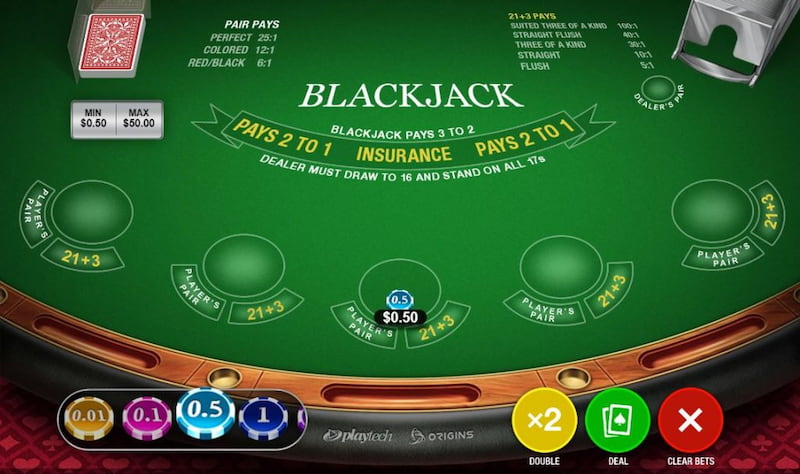

Cómo jugar al blackjack: reglas y consejos
El blackjack es probablemente el juego de cartas que más se juega en los casinos de todo el mundo y Perú no es una excepción. Es un juego muy atractivo para aquellos…