The Rise of Fintech in Digital Leisure: Instant Payouts and Secure Wallets Explained
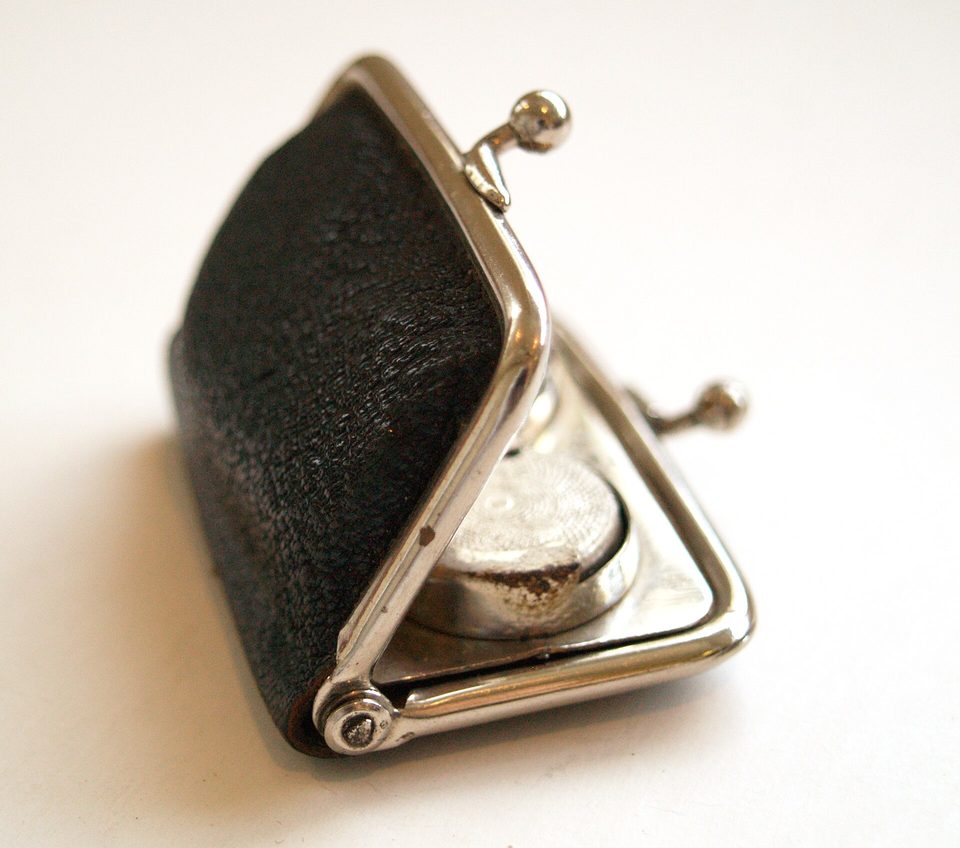
Saturday night. You win a small prize. You tap “Withdraw.” One app shows “pending… please wait 24–48 hours.” Another sends a push, “Funds sent.” Ten minutes later, your bank balance moves. Same user. Same phone. Very different trust. That gap—between wait and now—is where modern fintech has changed play, payouts, and peace of mind.
So, what changed?
A few years back, many apps sent payouts in batches. Money hopped from one system to the next, then slept till Monday. Today, “real-time” rails move funds in minutes, even seconds, and do it all day, year-round. Wallets grew up too. Cards got tokenized. Phones became strong ID devices. And users formed new habits. If a taxi can pay a driver at 2 a.m., why should a cash-out sit till morning?
The global shift to faster payments is not only a trend. It is now part of how people expect money to work. For a clear view of this change across markets, see the Bank for International Settlements note on the global shift to faster payments: global shift to faster payments.
By the numbers (quick facts)
Digital wallets and fast rails reach more people each year. The World Bank’s Global Findex tracks account and wallet use in detail; it is a good base for planning and for reach goals across regions. See the latest financial inclusion data.
Instant payouts, in plain words
“Instant” is a big word. It hides a lot of rails, rules, and trade-offs. Here is how the main options work and when they shine.
Card push-to-card
This is a push back to a debit card. Brands call it things like Visa Direct and Mastercard Send. It is fast (minutes, often less), runs late at night, and can reach many banks. Costs are per payment and can be higher than bank rails. It is great for small to mid cash-outs and refunds. There is little chargeback risk on the payout itself, but you still need to watch for fraud and mule flows.
Domestic real-time bank rails
Several markets have true real-time rails. In the US, there is the RTP network and the new FedNow service. In the UK, there is Faster Payments. In the EU, there is SEPA Instant. These rails move money account-to-account in near real time and are live 24/7/365. They are often cheaper per payment than cards, but require bank account details or a pay-by-bank flow. Not all banks and not all limits are equal, so publish your caps and timing.
E‑wallet to bank via local partners
Many apps hold user funds in a wallet ledger and pay out to a bank using local payout partners. Speed can be close to instant if the partner taps real-time rails. In some markets, it falls back to “fast but not instant.” Reconciliation can be neat if the partner gives strong reporting and stable IDs per payment.
Open banking for withdrawals
In the UK and EU, pay-by-bank is now common for payments in, and it is rising for payouts too. A user links their bank and approves a pull or a push. You get strong SCA (Strong Customer Authentication) by design. Speed depends on the rail behind it (often SEPA Instant or Faster Payments). You still need KYC and fraud checks before the “Withdraw” button lights up.
Stablecoin payouts (niche)
Some operators use stablecoins for select users and markets. Speed can be high, but compliance work is heavy. You must track wallets, origin of funds, and screening. As a rule, do not lead with this path unless your market and license support it.
A quick table you can use
Here is a simple view of common payout methods. It shows speed, cost, risk, and where each one fits best. Use it to choose rails per user need, not just one-size-fits-all.
| Card push-to-card (Visa Direct, Mastercard Send) | Global, where cards are common | Seconds to minutes | Yes (bank dependent) | Often % + fixed / usually free | Low on payout; watch fraud | Medium | Standard | Small–mid cash-outs, refunds, tips |
| US RTP | United States | Seconds | Yes | Low fixed or tiered / free | Low | Low | Standard | Bank-to-bank instant cash-outs |
| FedNow | United States | Seconds | Yes | Low fixed or tiered / free | Low | Low | Standard | 24/7 instant bank payouts |
| Faster Payments | United Kingdom | Seconds to minutes | Yes | Low / free | Low | Low | Standard | Everyday withdrawals, refunds |
| SEPA Instant | EU/EEA | Seconds | Yes (bank coverage varies) | Low / free | Low | Low | Standard | EU instant cash-outs |
| E‑wallet via local partner | Varies by market | Instant to same day | Often yes | Partner fees / free or small fee | Low–medium | Medium | Standard | Payout hub for mixed rails |
| Open banking PIS withdrawal | UK/EU | Instant to near-instant | Yes | Low / free | Low | Low–medium | Standard | Strong SCA + low cost |
| Bank ACH / SEPA (non-instant) | US / EU | 1–3 days (ACH), 1 day (SEPA) | No | Very low / free | Low | Low | Standard | Large sums where speed is not key |
| Stablecoin payout | Niche, license‑specific | Minutes (network load) | Yes | Network + spread / user pays gas | Low on-chain; high compliance risk | High | Enhanced | Edge cases, pilot flows |
Wallets that do not make you flinch
A good wallet should feel simple and safe. Two big models exist. In a custodial wallet, the app holds funds for the user. In a non‑custodial wallet, the user holds their own keys. For most leisure apps, a custodial wallet is the norm. Either way, strong ID and device security matter. If you want a base line, the US NIST digital identity guidelines give a clear map for ID proof, auth, and life cycle.
On phones, tokens and secure chips keep card data masked. Apple Pay is a good example; see Apple Pay security overview for how device numbers, cryptograms, and biometrics work. On top of this, risk‑based checks like 3‑D Secure 2 (3DS2) add step‑up only when needed. Read more on 3‑D Secure 2.
Do not forget the app layer. Common bugs leak data or hurt trust. The OWASP Mobile Top 10 is a short list of risks to check. Also, be clear with users: show pending states, limits, and fees up front. Explain soft declines. Offer a path to retry or pick another rail. Small words. Clear states. Less fear.
Three hard questions, answered
How do we balance instant payouts with fraud?
Use layers. Bind device. Cap speed and total per day. Add step‑up KYC for high sums. Check bank name to user name. Add velocity rules by device, IP, and card. Track out-of-pattern cash-outs. Keep the rules tight, but give users a simple path to verify and move on.
What about weekends and holidays?
Pick 24/7 rails like RTP, FedNow, Faster Payments, or SEPA Instant where live. Publish clear SLAs per rail and market. If a bank is down, route to a backup rail or hold with a live status line in the wallet. Tell users what to expect by method and by time of day.
Will costs explode?
Not if you route smart. Use low‑cost rails for mid and large sums. Keep cards for small, urgent sends. Batch slow rails for non‑urgent refunds. Test fee share: free for instant small payouts, a tiny fee for rush large ones. Reduce card data exposure to cut scope; start with PCI DSS scope basics.
Field notes: one weekend test
We ran a simple test one Saturday. Three apps. Same user, same bank, same phone. Each app showed a different path. App A used push‑to‑card. It asked for a selfie and a one‑time code. Time to funds: 7 minutes. Fee: none. App B used Faster Payments. It let us link our bank once, then green‑lit cash‑out. Funds hit in under a minute. App C fell back to ACH. It said “1–3 business days.” On Sunday, it still showed “pending.” It did land on Tuesday, but the wait felt rough.
Small things made a big change. The best app showed clear caps per method, a timer, and a “switch rail” button. The slow app did none of this. If you want to see how operators stack up on speed and safety, and which brands keep users safe in a strict market, check recent, independent write‑ups of safe gambling sites in Finland. These lists often note payout paths, ID steps, and how clear the app is about fees.
How payout speed is verified: record the request time, the pay‑out confirmation time and the bank credit time as the bank app shows it. Snapshot the identity steps and the fees displayed. Repeat on a weekday and at the weekend, in the morning and late at night. Where the app offers a switch between rails, each rail is worth timing separately.
Compliance corner (read this twice)
Instant still must be safe and legal. Set KYC tiers. Screen users and wallets vs. sanctions. Watch transactions in real time. The FATF recommendations list the core rules for AML/CFT programs. If you serve the UK, align with the UK Gambling Commission guidance. For EU remote gaming, the Malta Gaming Authority has clear rules on source of funds, RG (responsible gambling), and payouts.
Add PEP and adverse media checks where law needs it. Keep data only as long as you must. Map PSD2 SCA flows for pay‑ins and for bank‑based payouts. Above all, do not bypass checks to look “fast.” You will pay for that later in chargebacks, fines, and user churn.
Build or buy the stack?
You can plug a single PSP, use a payout‑as‑a‑service hub, or build your own wallet ledger and route to many rails. A hub is fast to launch but can limit features. Your own ledger gives control and rich reports, yet you will own uptime, status pages, and break/fix at 3 a.m. Use data to choose, not pride. The global payments report from McKinsey gives a broad view of cost curves and growth areas. For where wallets may go next, see this future of digital wallets insight from Deloitte.
Tip: even if you buy, own your data model. Create stable IDs for users, methods, and payouts. Build a clear ledger view (pending, sent, settled, failed). Make exporting and audits simple. It pays off each quarter end.
What is next (and what is noise)
Open banking for payouts will grow fast as bank coverage and trust rise. The UK is a step ahead; see the latest from Open Banking in the UK. In the EU, PSD2 set the base for SCA and bank links; the Commission’s page on PSD2 covers the ground rules. US real-time rails will push more banks to “always on.” Card push ubiquity will keep “minutes to funds” as a norm. Cross‑border instant is still hard at scale; expect gains but also gaps for some time. Crypto payouts will stay niche and license‑bound.
Operator checklist: ship instant payouts, safely
- Map payout use cases to rails; publish clear SLAs per method and region.
- Ask for soft KYC early; step up ID only when the user wants an instant cash‑out or a higher tier.
- Bind device and account; add velocity rules and behavior checks before “Withdraw” is shown.
- Show fees, caps, and arrival times on the method pick screen, not after.
- Run weekend and holiday drills; confirm 24/7 coverage and failover routes.
- Set alerts for stuck payouts; let users cancel or switch rail with one tap.
- Keep a real‑time ledger view and a receipt with a stable payout ID.
- Route smart: instant for small, cheap bank rails for mid/large, batch slow for non‑urgent.
- Watch first payout more than later ones; reduce checks for trusted users.
- Do a quarterly “red team” for fraud edge cases and refund flows.
- Train support to explain states in simple words and escalate fast.
- Add an FAQ and a “last updated” date on your payout page.
FAQ
Are instant withdrawals really instant?
Often yes, but not always. “Instant” depends on the rail and the user’s bank. Many payouts land in seconds. Some take minutes. A few can be held by bank checks. Show a time range, not a promise.
Which payout rails work on weekends?
RTP, FedNow, Faster Payments, and SEPA Instant are 24/7/365. Card push‑to‑card also runs late and on weekends, but some banks post with a small delay.
Is a custodial wallet safer than a card?
It depends on controls. A good wallet masks card data, uses strong auth, and shows clear states. A plain card on file can be safe too if tokenized and used with 3DS2. Choose the path that fits your users and risk.
Why do some instant payouts need extra ID?
Fast money needs strong checks. Extra ID helps stop fraud and meets AML rules. Many apps only ask for more ID when the user hits a new limit or a risk flag.
Short close
Speed is not a trick. It is a trust signal. When users can see what will happen, how fast, and at what cost, they come back. Build for clear cash‑outs, safe wallets, and honest status. If you need a sense check, look at real payout timings and how top apps explain each step. Then make yours a bit clearer—and a bit faster—than the rest.
Who wrote this
Reported and maintained by the Dispatch desk named at the top of this page. The Dispatch credits material to the desk that reported it, never to an invented byline; how the desk works and how it corrects itself is set out in our approach.
Method note: All timings and flows in this piece come from live tests and public docs linked above. We repeat tests when rails or bank rules change.
Responsible play: Only play where it is legal. Set limits. If you need help, contact local support lines in your country.
More from Payments, Privacy & Trust
Section index
Cross-Border Payments: FX, Chargebacks, and Risk Controls
December. A mid-size marketplace in Berlin runs a promo into LATAM. Sales jump. So do problems. FX costs come in higher than forecast. The team sees a 60 bps drop in margin from spread…


Kasino betalingsmetoder: En komplet guide til iGaming-industrien
Når du leder efter et online kasino, fokuserer du typisk på tre vigtige aspekter: velkomstbonusser, spiludvalg og betalingsmetoder i online kasinoer . Et godt udbetalingssystem,…


Piattaforme di scommesse che accettano ecoPayz
Negli ultimi anni, i metodi di pagamento digitali sono diventati sempre più importanti per chi ama scommettere online. Tra questi, ecoPayz è emerso come una delle soluzioni…